Reduce dependence.
Use direct human power for mechanical tasks instead of converting grid electricity into motion every time.
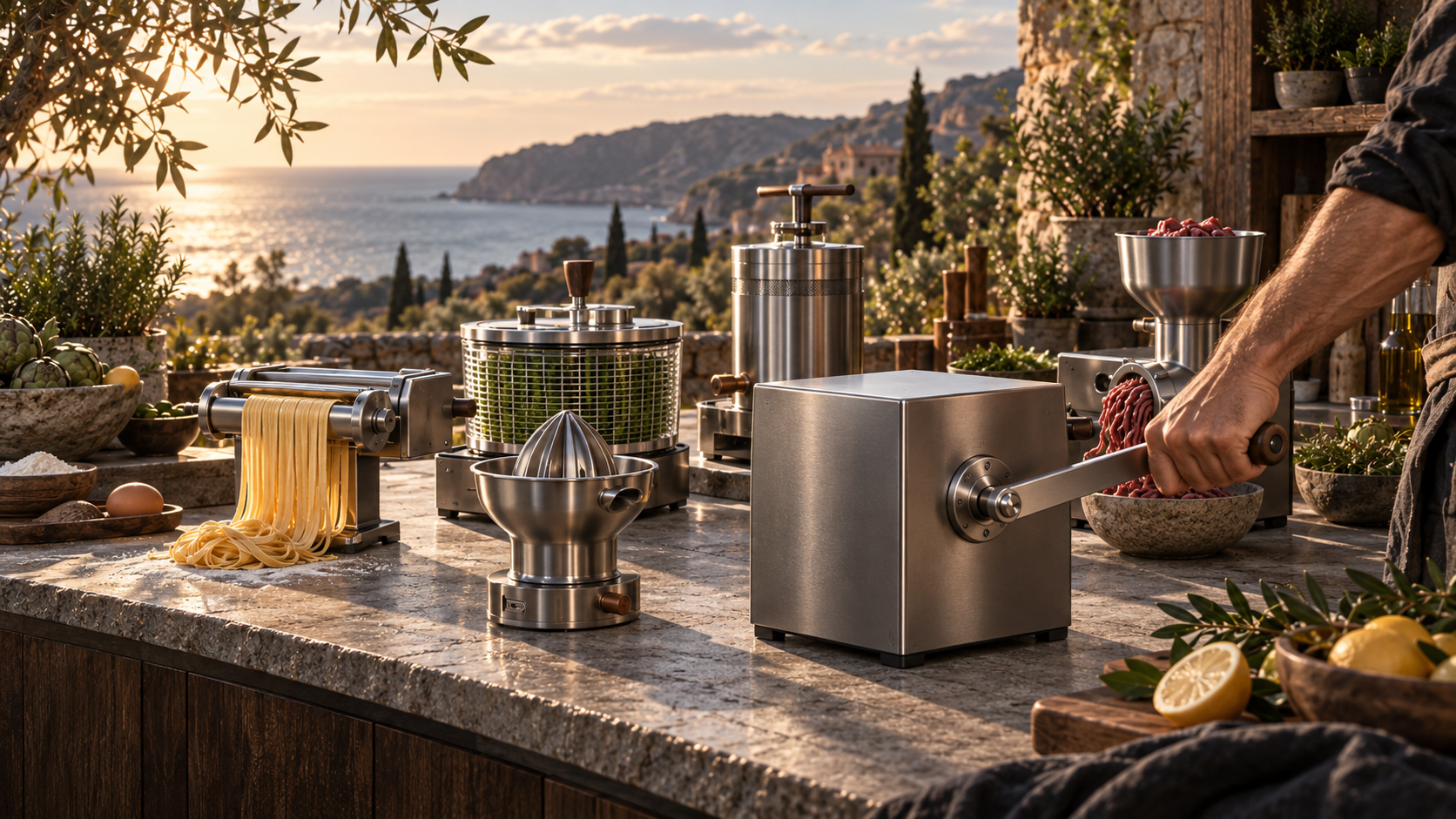
D8sign Lab / Human power
One durable crank. A family of kitchen tools. Direct mechanical work when possible, stored electricity when useful.
01 / Why
Energy prices move. Supply chains remain exposed. Short-lived appliances turn useful materials into waste. The kitchen can become a small but meaningful place to regain control.
Use direct human power for mechanical tasks instead of converting grid electricity into motion every time.
A common drive system, replaceable parts and mechanical fasteners reduce the need to discard an entire appliance when one component fails.
Effort becomes tangible. Five minutes of movement has a purpose, and every stored watt-hour has a human scale.
Context sources: Eurostat energy balances, Eurostat household food-waste estimates, and the GHG Protocol Product Standard. This page presents a design concept, not a verified environmental claim.
The proposition
Direct drive avoids unnecessary conversion losses. Electrical storage remains available for speed, short bursts, lighting and later use.
02 / How
The cube stabilises the effort, optimises rotational speed and routes it to the most efficient output for the task.
A mechanical coupling sends torque straight to pasta rollers, grinders, presses, juicers and salad spinners.
Supercapacitors collect energy and release it quickly when a compact motor needs high current for a short task.
A removable power module keeps useful energy for lighting, controls and low-power kitchen needs when physical effort is less convenient.
03 / Five minutes
This early model keeps the promise honest. Choose a comfortable duration and pace to see a preliminary energy estimate.
Concept assumption: 75% electrical conversion and storage efficiency. Real output depends on gearing, generator, storage chemistry, rider comfort and duty cycle. Figures require prototype validation.
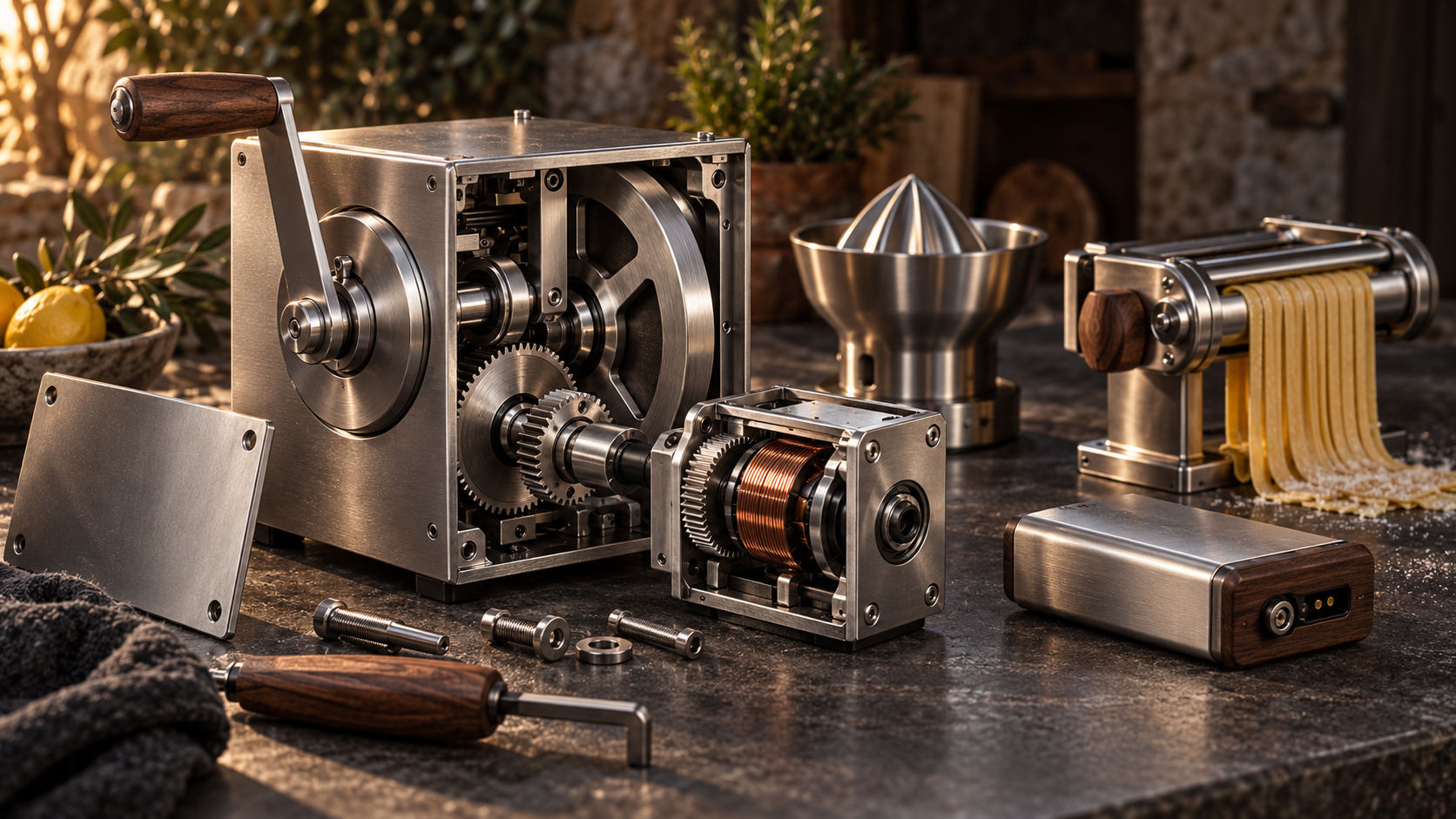
Screws instead of glue. Standard bearings. Replaceable drive cartridges. Stainless steel where food and hands meet. Copper where extraction or electrical performance benefits from it.
04 / Designed to outlive trends
The environmental value is not only in the energy saved. It is also in avoiding repeated manufacture, transport and disposal.
Cleanable, corrosion resistant and suitable for high-wear interfaces.
Used selectively for conductivity, heat transfer and premium extraction components.
Warm, replaceable touchpoints that age visibly instead of hiding wear.
Bearings, seals and fasteners selected for availability and straightforward servicing.
05 / Concept shop
Illustrative pricing for the business-model test. These products are not yet available for purchase.
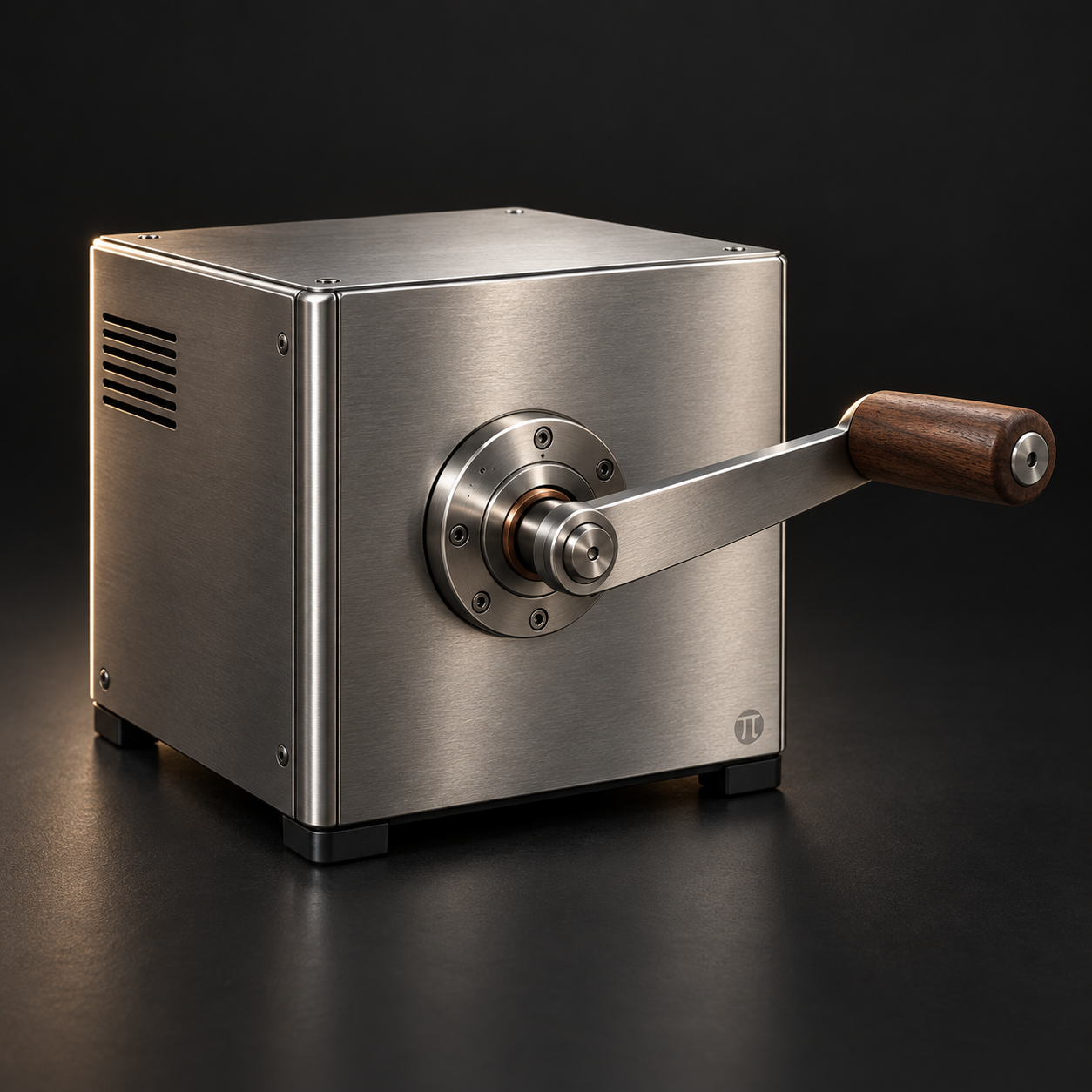
Drive cube, flywheel, generator cartridge and universal mechanical coupling.
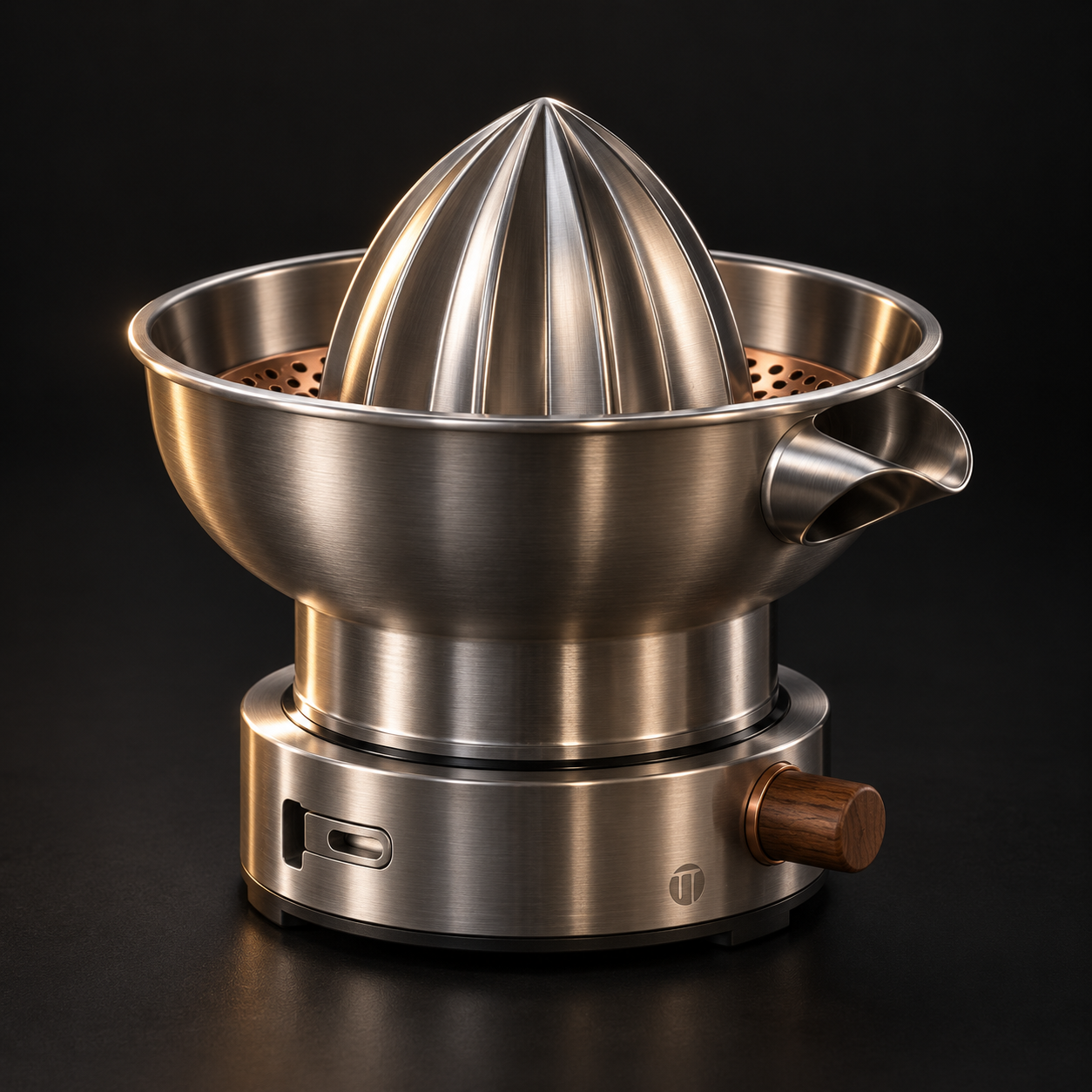
Food-grade pressing bowl with a removable copper extraction surface.
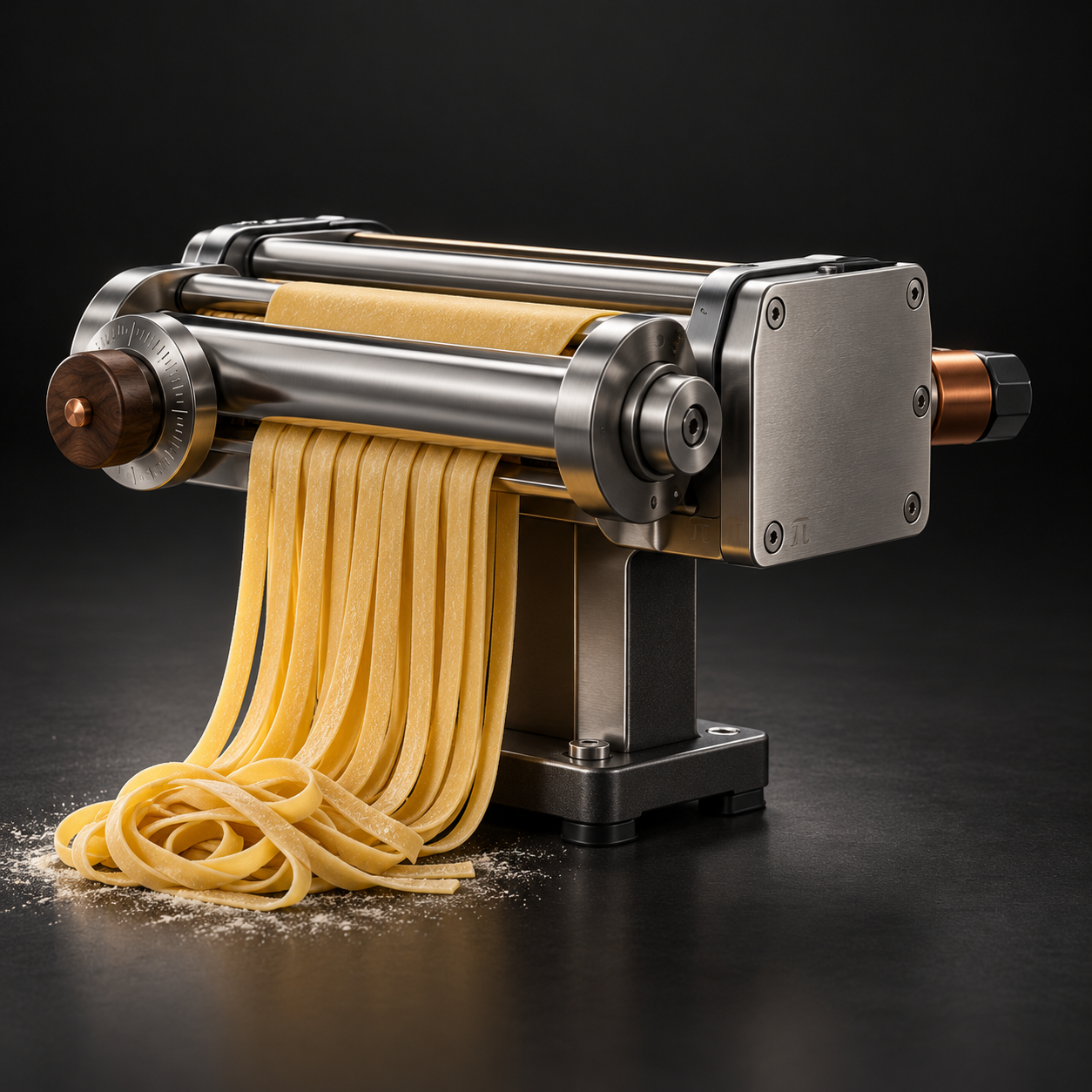
Adjustable steel rollers, serviceable gears and the standard drive coupling.
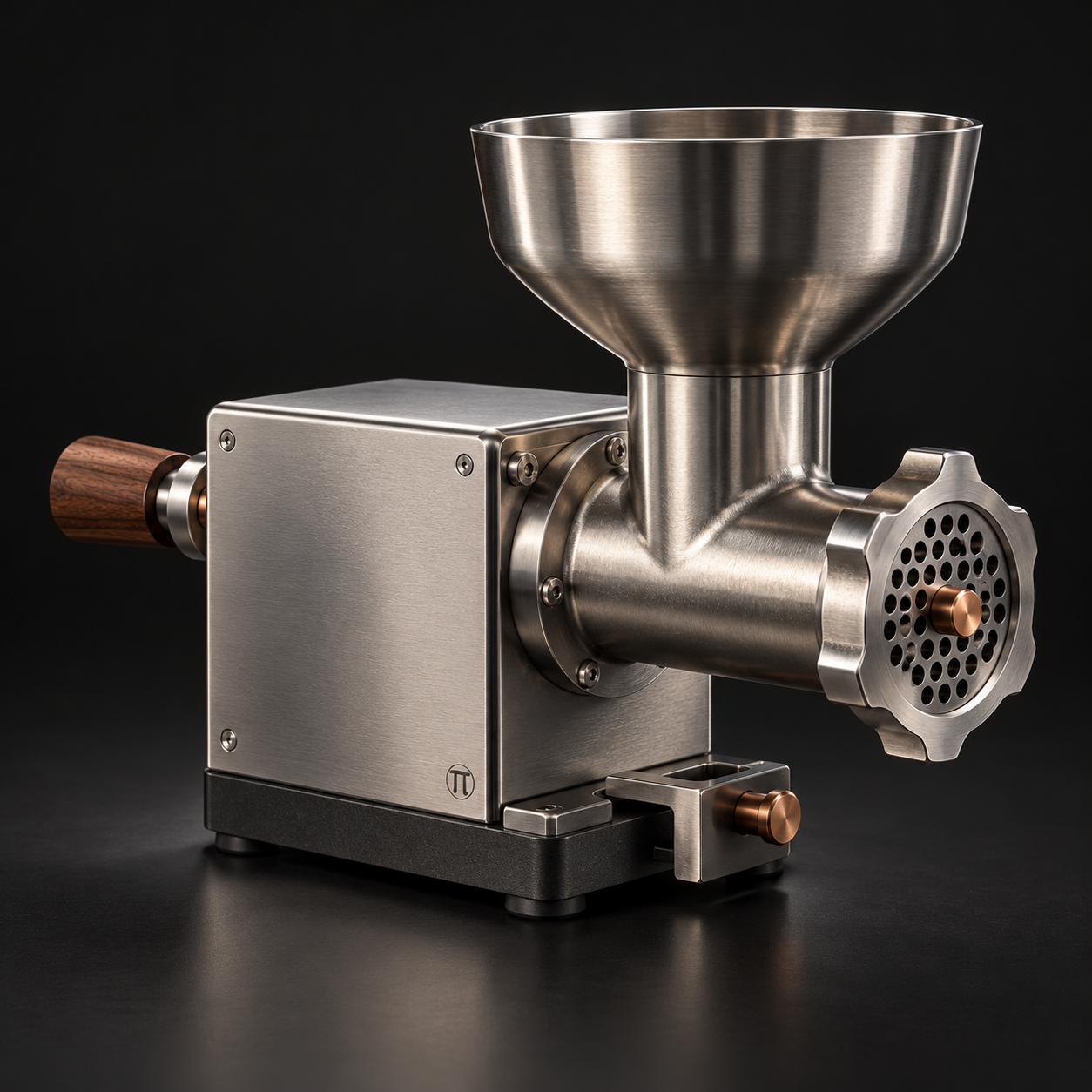
Slow torque, removable auger and tool-free food-contact disassembly.
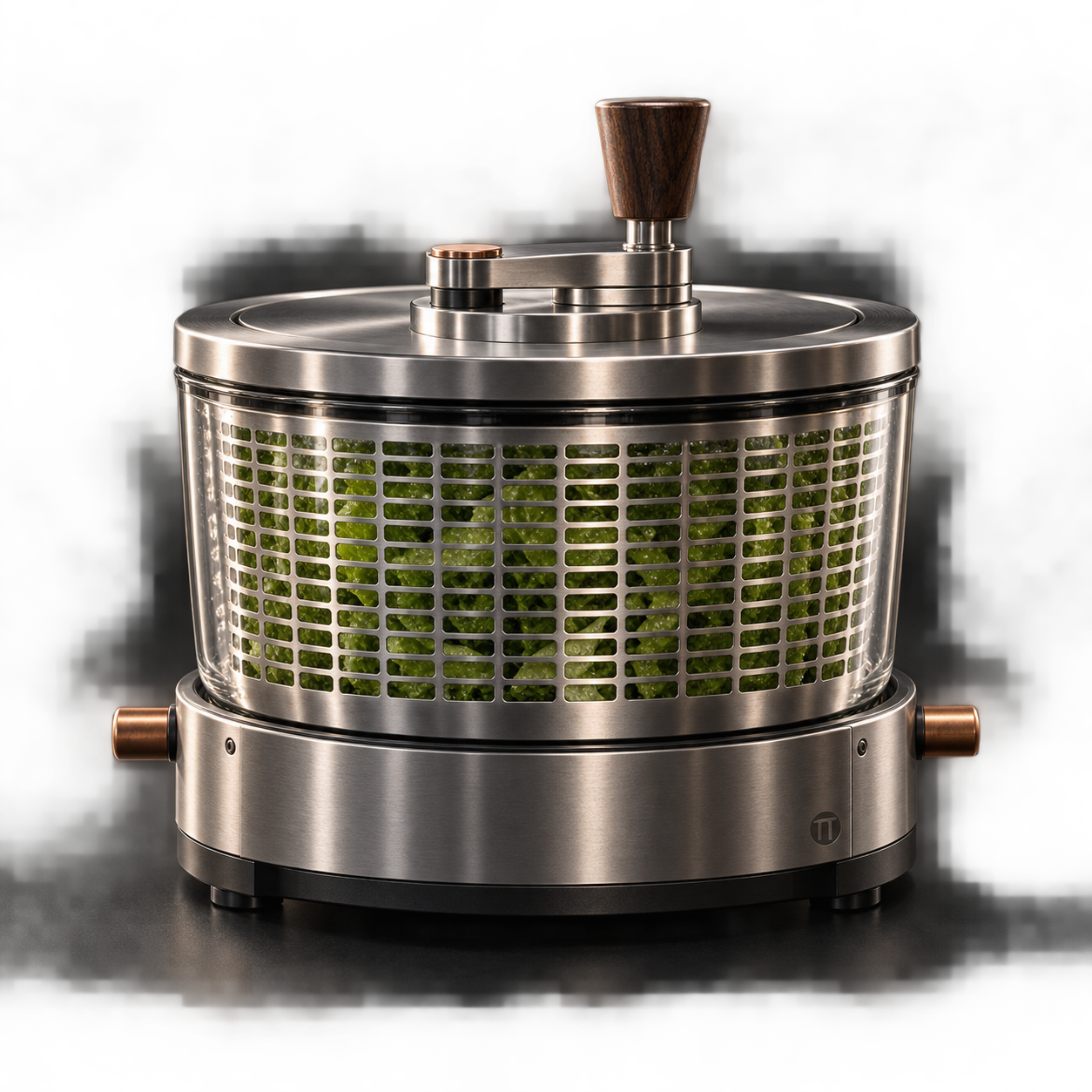
Balanced steel basket with a washable clutch and high-speed gearing.
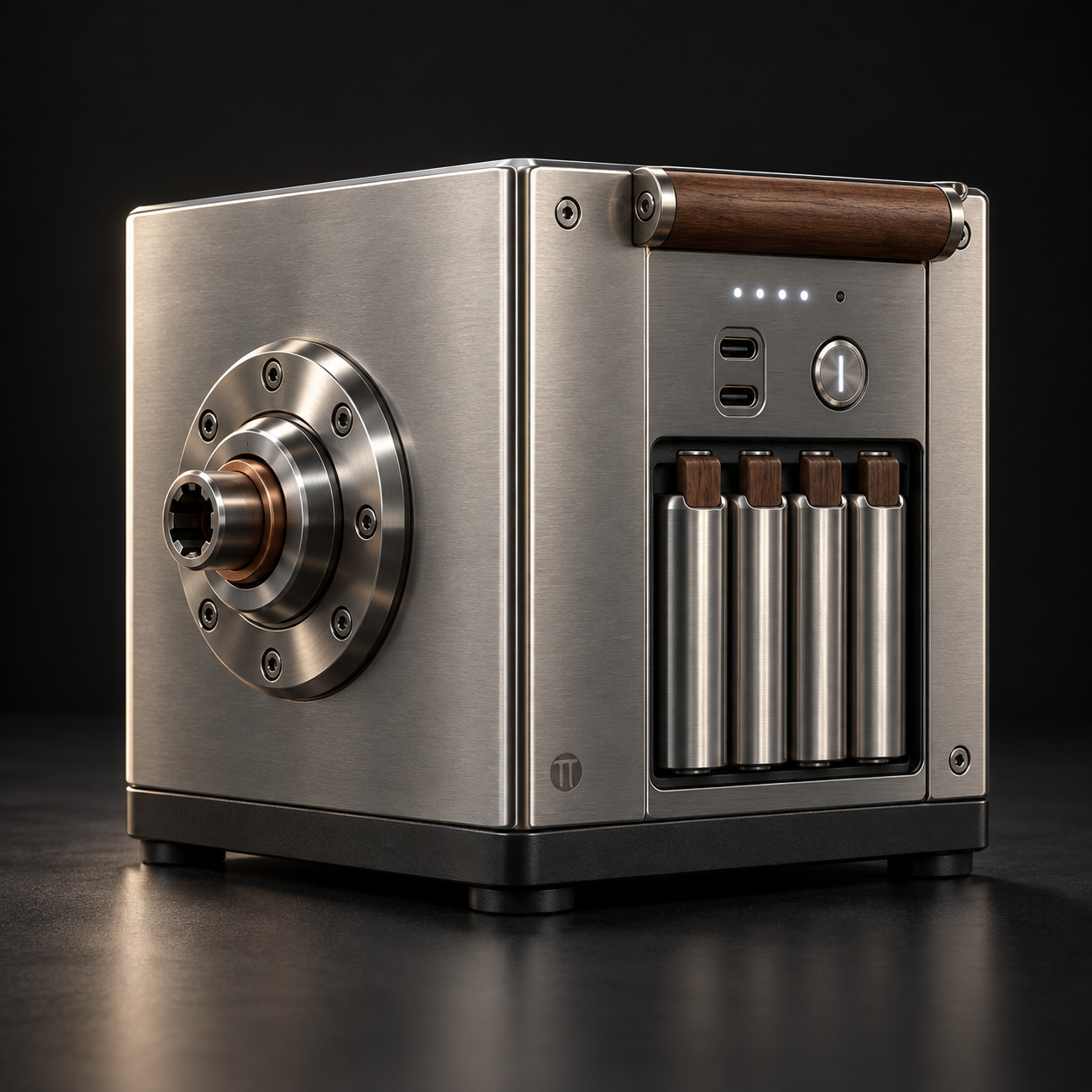
Replaceable cells and high-current storage for later kitchen and lighting needs.
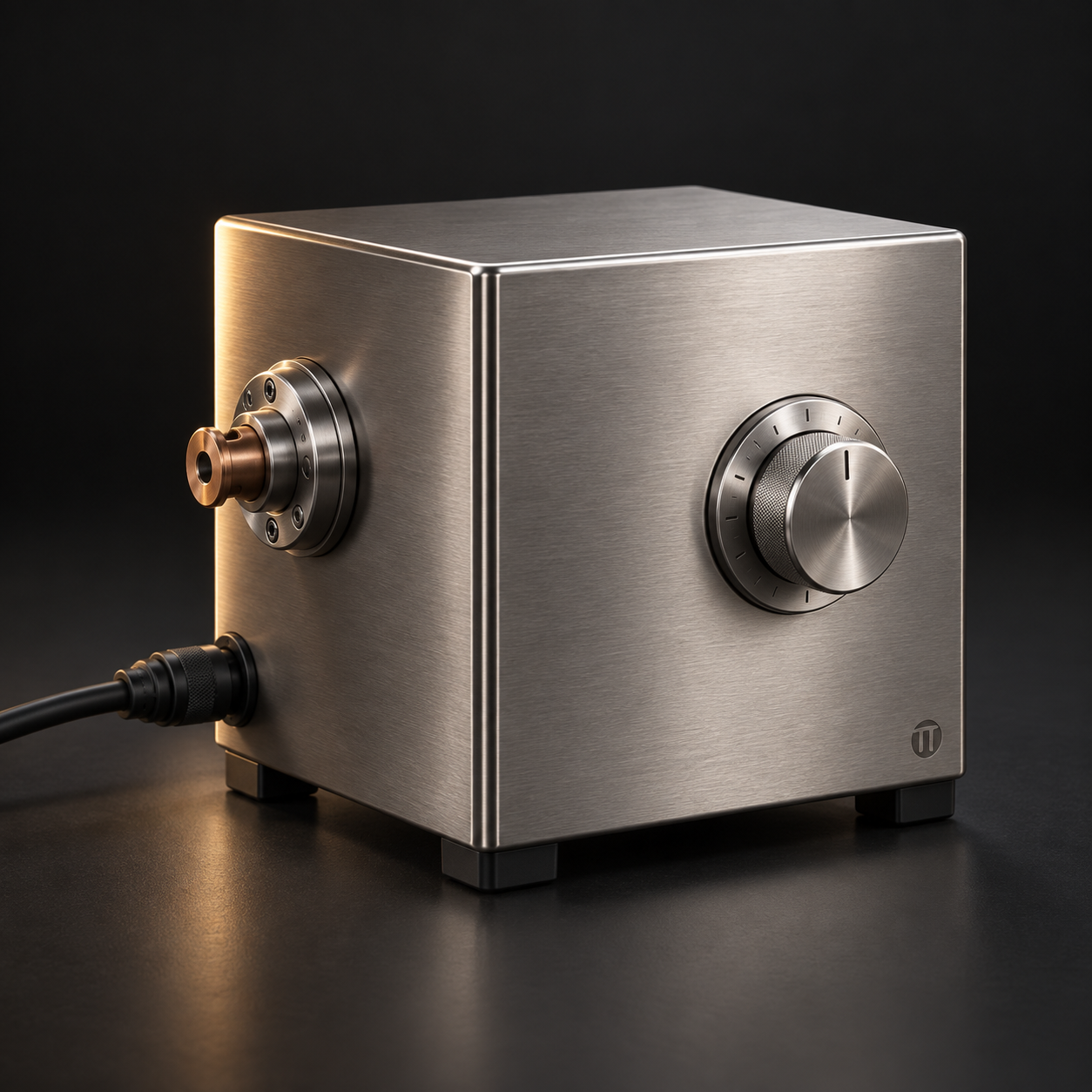
Plugs into the common coupling and replaces hand power when electricity is available.
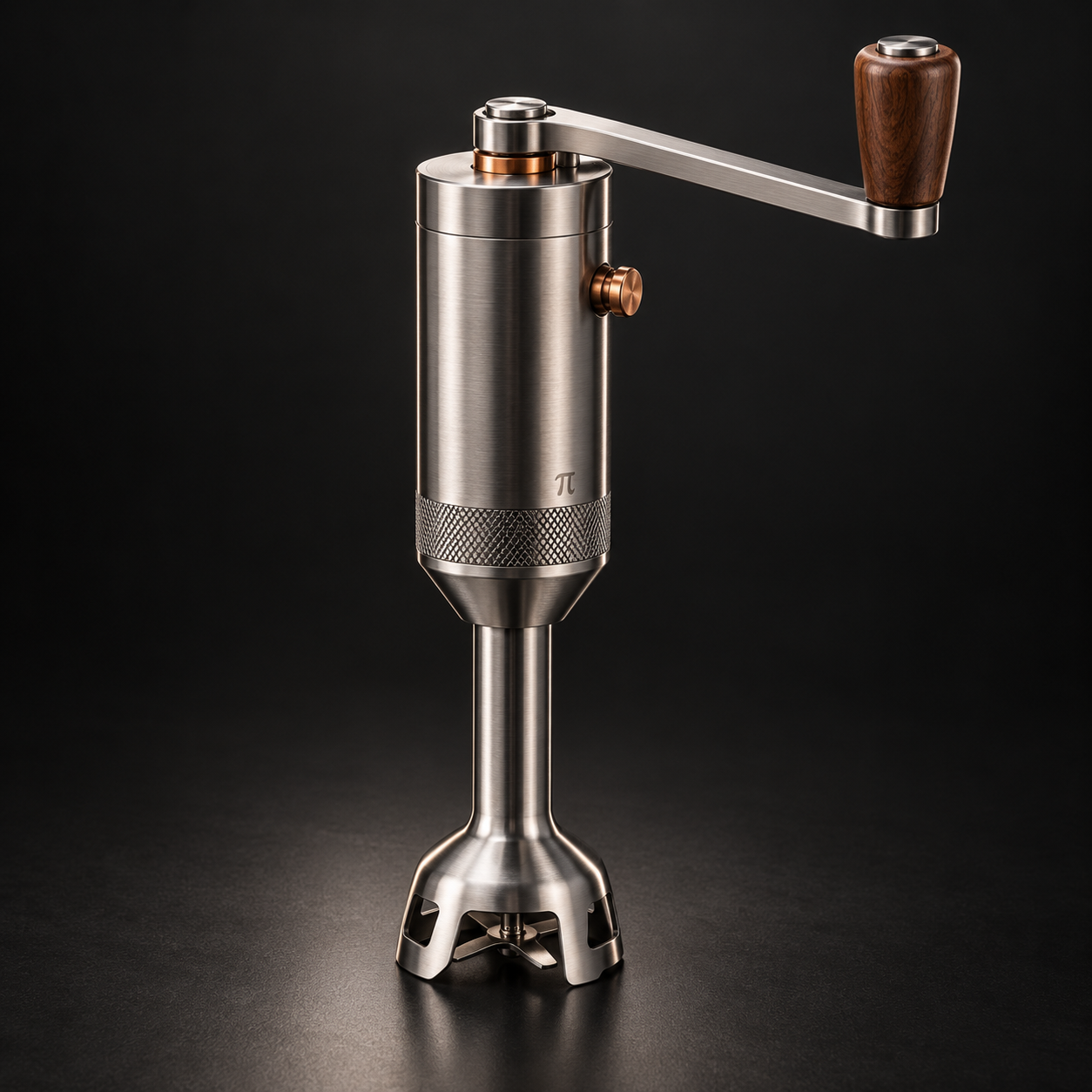
A compact crank body held in one hand, with a removable blending shaft below.
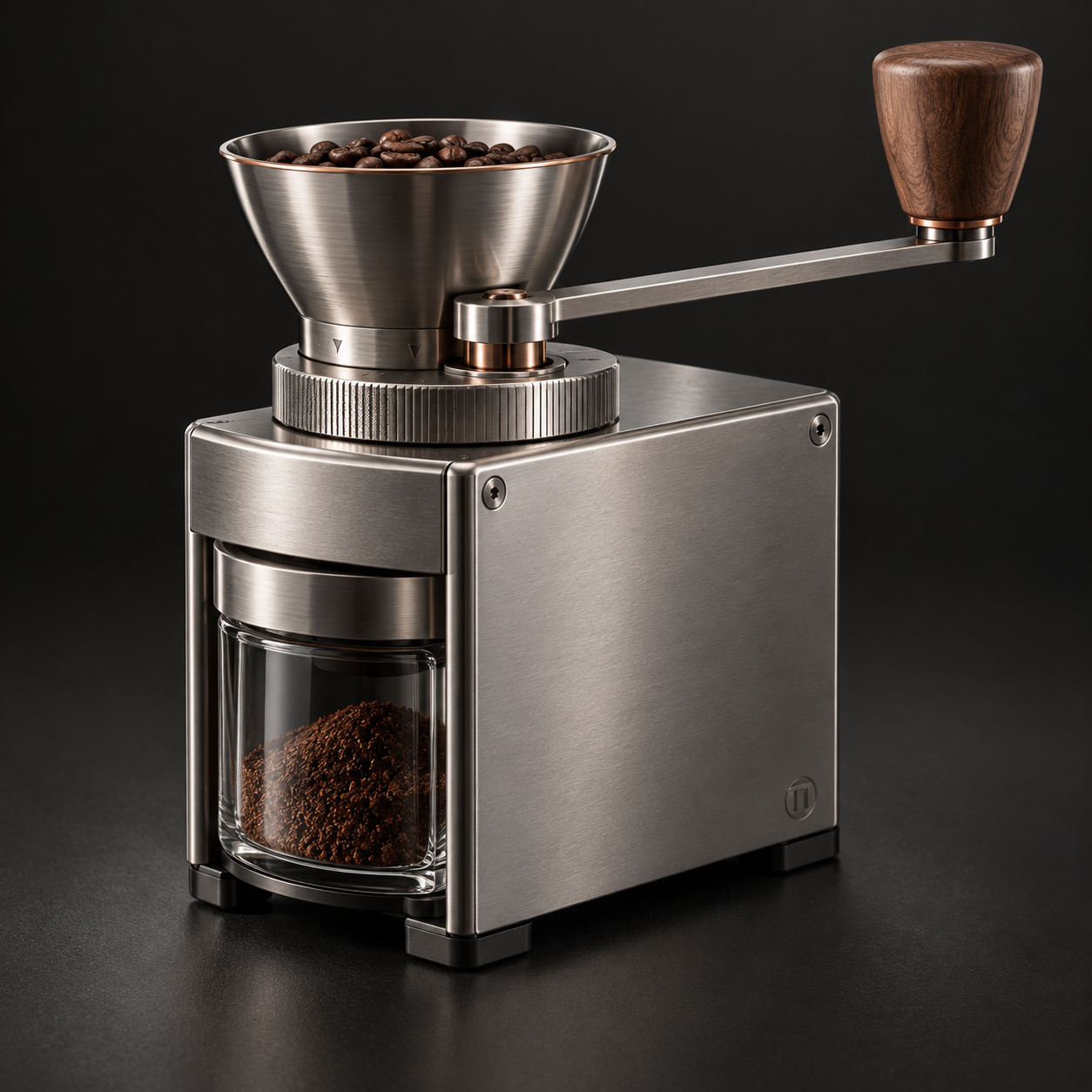
Serviceable steel burrs, precise adjustment and a removable grounds cup.
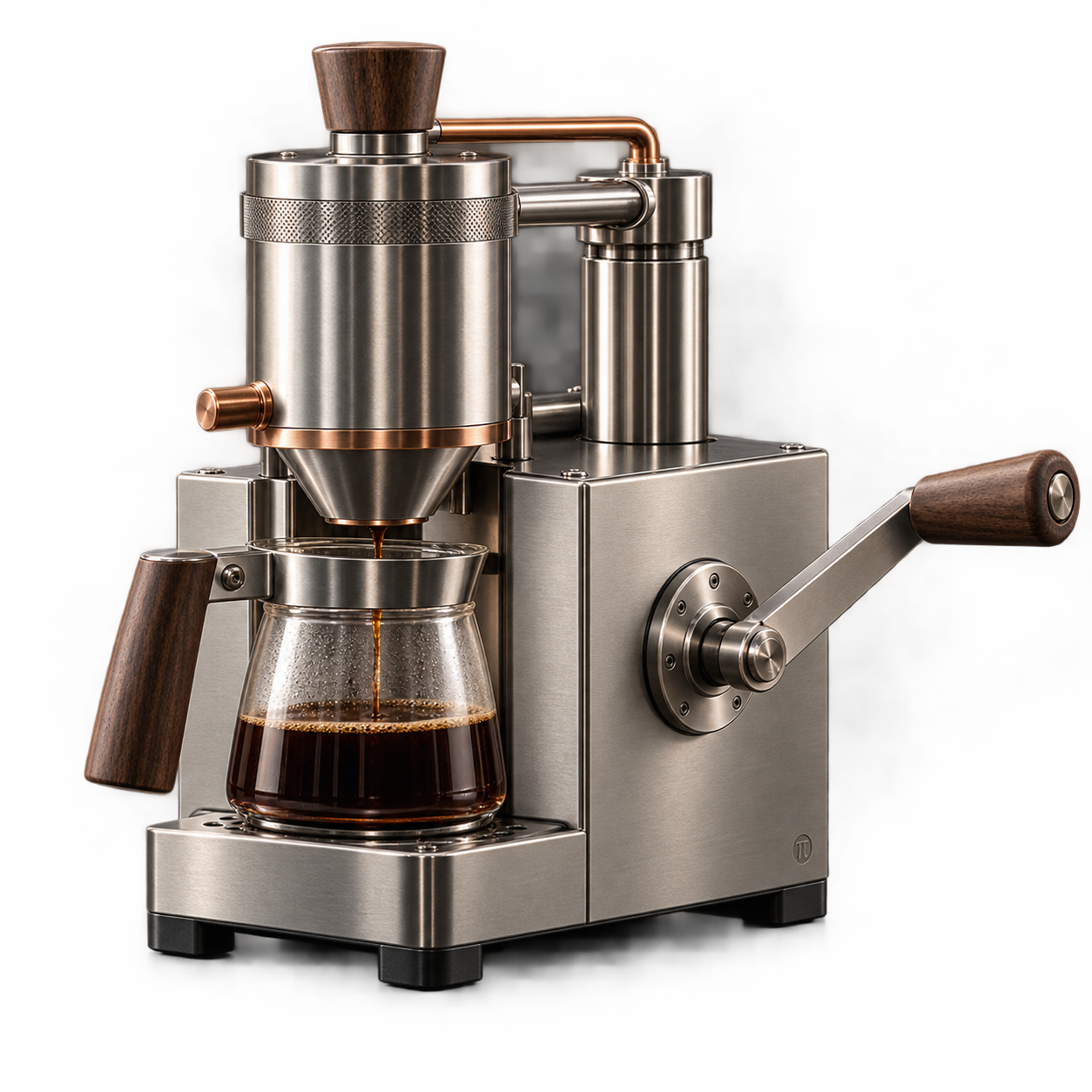
A manual piston and circulation system with a copper thermal path.
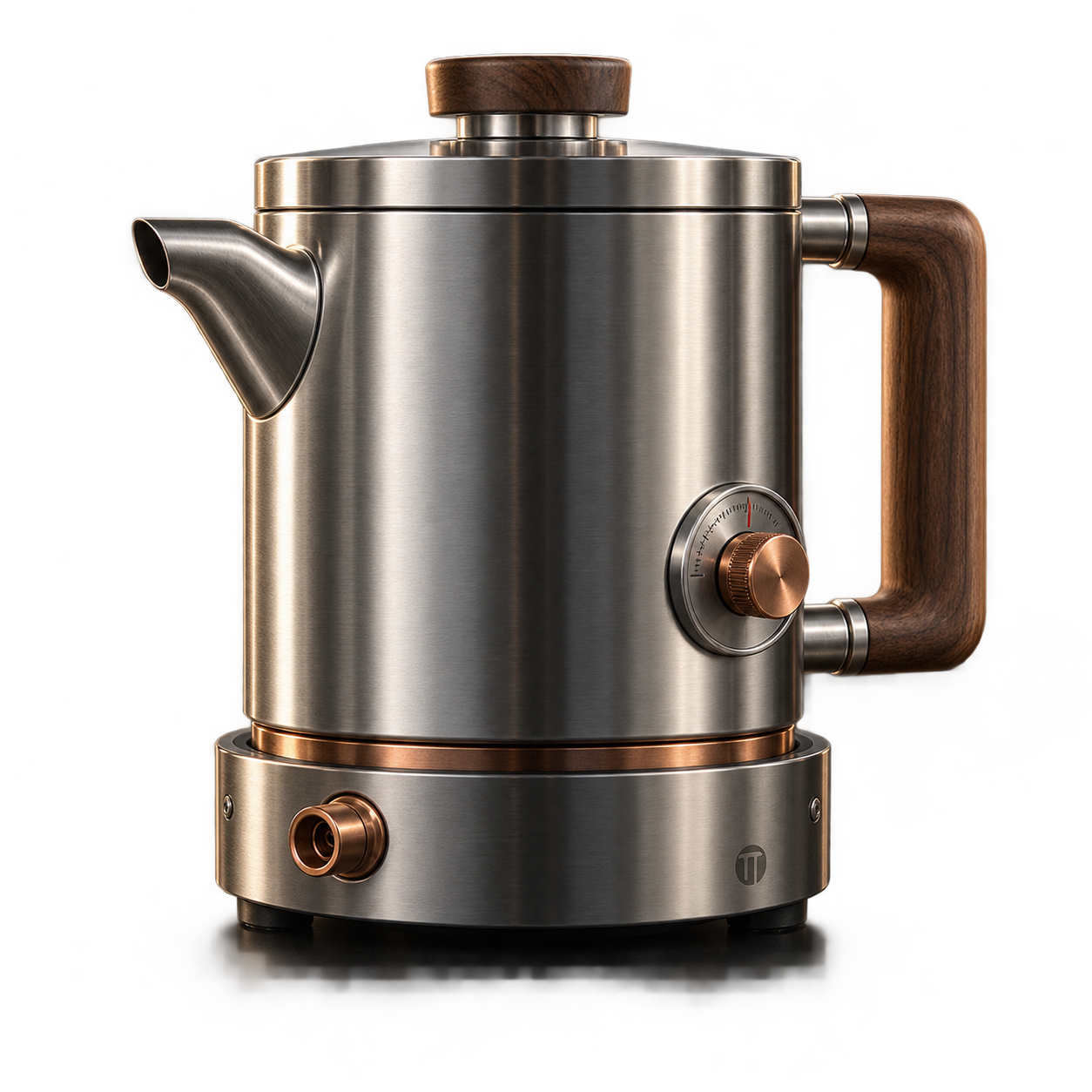
An insulated vessel that connects to stored power through an efficient thermal base.
Replaceable heating elements, a removable crumb tray and stored-power input.
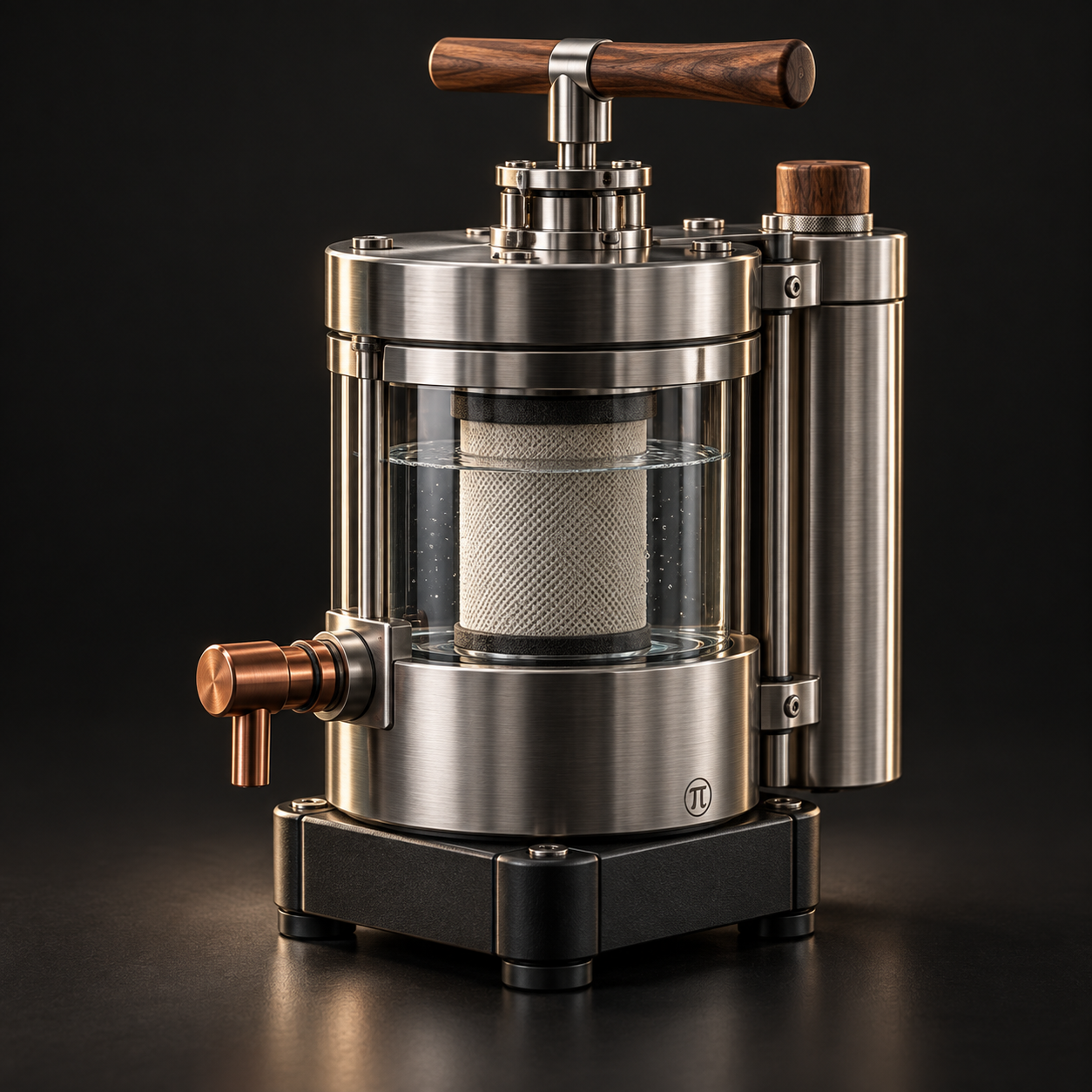
A replaceable filter cartridge with gravity flow and a hand-pump pressure option.
Concept store only. Ratings, reviews, prices and availability are fictional placeholders for testing the future customer journey.

A working symbol for a circular idea
This is the first chapter of a modular kitchen designed around human effort, material honesty and products worth repairing.
Discuss the concept